Ever stepped out of an elevator and arrived in your own quiet vestibule instead of a busy hallway? If you are touring Bal Harbour condos, you will see this feature often. You want privacy, efficient circulation, and strong resale appeal, but you also want to be sure the details match your lifestyle. This guide explains what a private elevator foyer is, how it works in Bal Harbour buildings, and what to evaluate before you buy. Let’s dive in.
Private elevator foyer defined
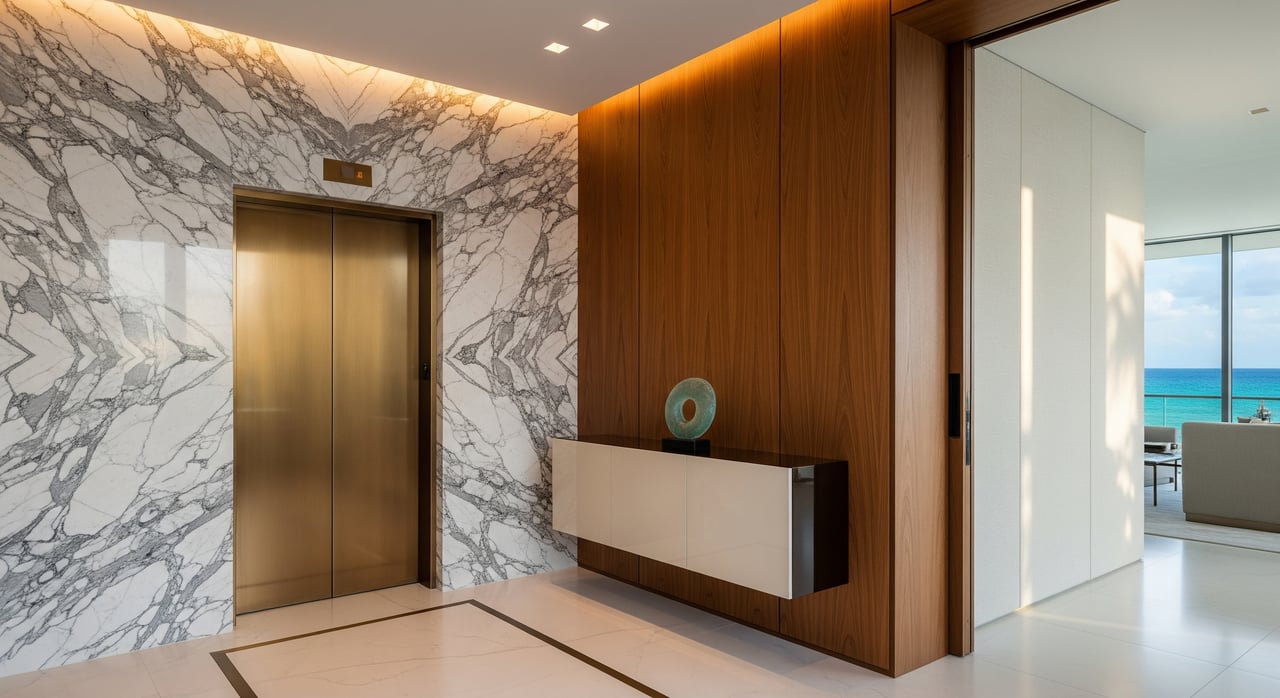
A private elevator foyer is an elevator landing that opens into an enclosed vestibule serving a single residence or a very small number of residences. It creates a controlled transition between the elevator and your front door. This is different from an elevator that opens onto a shared corridor.
You may see a few variants when you tour:
- True private foyer: The elevator opens to a lockable, enclosed foyer that is part of your unit. Only your residence uses it.
- Semi-private foyer: Two neighboring units share a small landing. It feels more exclusive than a long corridor but is not exclusive to one home.
- Direct-to-residence elevator: The cab opens straight into your home without a vestibule. It is private but lacks a separate transitional space.
- Service elevator and service foyer: A separate access point for deliveries or staff, often near the kitchen or service corridor. Useful for circulation, but not the same as a resident foyer.
Why PEFs matter in Bal Harbour
Bal Harbour is known for boutique luxury towers, beachfront living, and high service standards. A private elevator foyer fits that lifestyle by signaling quiet privacy, smoother guest arrival, and hotel-like service expectations. Many high-floor and trophy residences use PEFs to differentiate from standard layouts.
Daily living: privacy and flow
A well-designed private foyer improves how your home feels and functions day to day.
Privacy and sightlines
A foyer buffers your living areas from the elevator. Guests can wait in a quiet space without seeing into main rooms. Good layouts avoid a direct line of sight from the elevator to living or bedroom spaces.
Comfort and noise
The foyer acts as a sound and climate buffer. It can reduce elevator noise and drafts reaching your living areas. If it is part of your unit, you control its climate and finishes.
Guest and service choreography
Many luxury buildings separate resident arrival from deliveries. You can welcome guests via the private foyer while routing packages and staff through a service elevator and service entry. This keeps your main spaces calm and organized.
Building operations and costs
A PEF itself does not require extra staff, but it often appears in buildings that aim for higher service tiers. That can influence monthly costs and expectations.
- Staffing model: Buildings with private foyers often pair them with doormen, concierge, valet, and on-site engineering. Ask how coverage works and whether it is 24-7.
- Operating costs: High-service buildings tend to have higher HOA assessments to support staffing, elevator maintenance, and common-area finishes.
- Security protocols: Access can be controlled by keys, fobs, or concierge release. Policies, hardware, and resident compliance all matter for real security.
Code, safety, and systems
You want peace of mind that the layout is elegant and compliant.
- Life safety and egress: Elevators and foyers must meet life-safety codes. Stairwells remain the primary egress. Doors, fire separation, and pressurization requirements still apply.
- Emergency operation: Elevators follow strict inspection and recall protocols. In hurricane-prone Miami-Dade, confirm backup power and elevator performance during outages.
- Accessibility: Elevator cars must meet accessibility standards. If a foyer is tight, test maneuvering space.
- Ownership and HVAC: If the foyer is part of your unit, you likely control its HVAC and finishes. If it is a common element, the building typically manages climate and maintenance.
Value and resale in Bal Harbour
Private foyers are widely viewed as a luxury signal and can position a residence at the top of a building’s price ladder.
- Premium positioning: In Bal Harbour’s ultra-luxury segment, privacy features often command higher prices per square foot than comparable non-PEF units.
- Liquidity: Demand for privacy is strong in this market, but premiums still depend on buyer pool and product tier. Match comparisons carefully.
- Space trade-offs: A foyer takes square footage. Some buyers prefer an open plan over a larger entry. Weigh the benefit of privacy against usable living area.
- Comparable sales: For comps, compare within the same building or across similarly positioned luxury towers with private foyers.
How to evaluate a PEF on tour
Use this quick framework as you compare floor plans and service levels.
Physical details to check
- Type: True private or semi-private shared landing?
- Legal status: Is the foyer part of the unit or a common element? Confirm in the condo declaration and plat.
- Dimensions and height: Can two or three people stand comfortably? Is there room for a console table or bench?
- Sightlines: Is the view from the elevator screened from living areas?
- Lockability and controls: Door hardware, fob access, intercom, or concierge release in place?
- Storage and powder room: Is there a coat closet or nearby guest bath?
- Sound and vibration: Listen for elevator noise or mechanical rumble during peak hours.
- Fire door and egress: Note door ratings and how the foyer connects to the egress path.
Operations and service questions
- Elevator access protocol: Keys, fobs, and guest procedures. Are codes or single-use credentials available?
- Elevator speed and maintenance: Ask for maintenance schedules and recent service records.
- Staffing: Concierge hours, doorman coverage, valet model, and engineering presence.
- HOA budget and reserves: How do elevator and staffing costs appear in the operating budget and reserve study?
- Emergency plan: Generator capacity for elevators and essential systems during storms or outages.
- Special assessments: Any recent or planned elevator or lobby upgrades?
Financial and resale factors
- Recent comps: Compare like-for-like homes with private foyers in the same tower or peer buildings.
- Assessments: Understand monthly fees and historical increases for high-service properties.
- Rental policies: Restrictions on short-term rentals can influence investor demand and resale.
- Taxes and title: Confirm whether foyer square footage is included in your taxable area and unit boundary.
Due diligence before you commit
A little homework goes a long way toward a smooth closing.
- Review the condo declaration, bylaws, plats, and unit survey to confirm foyer ownership and boundaries.
- Tour twice, day and evening, to assess noise, flow, and elevator traffic.
- Request elevator maintenance logs, service contracts, and recent repair history.
- Obtain the building’s budget, reserve study, HOA meeting minutes, and any capital plan.
- Check for special assessments, insurance claims, or storm-related repairs.
- Confirm generator and emergency procedures for elevator operation.
- Consult a buyer’s attorney and, if needed, an architect or systems consultant for unique layouts.
Smart questions to ask building reps
- Is the foyer deeded to the unit or part of the common elements?
- How is elevator access controlled for residents, guests, and staff?
- Are there dedicated service elevators and a defined delivery route?
- What are typical staffing levels and hours for concierge and doorman?
- Can you provide recent elevator maintenance and inspection records?
- What is the backup power plan for elevators and essential systems?
- Are any lobby, elevator, or foyer upgrades planned or assessed?
Is a PEF right for you?
If you value privacy, elegant arrivals, and a calm front-of-house, a private elevator foyer can elevate your daily experience. In Bal Harbour, it also aligns with the market’s preference for high service and discreet design. The key is to balance the privacy benefit against space efficiency and operating costs. With the right layout and building operations, a private foyer can be both functional and a subtle status marker.
Ready to compare specific floor plans and service tiers in Bal Harbour? Request a private consultation with the Cassis Burke Collection to review options and strategize your purchase.
FAQs
What is a private elevator foyer in a Bal Harbour condo?
- A private elevator foyer is an enclosed landing where the elevator opens into a small vestibule serving one home or a very limited number of homes, creating a controlled transition before your front door.
Do private elevator foyers increase HOA fees in Miami-Dade buildings?
- Not directly, but they commonly appear in high-service towers where staffing and amenities raise overall operating costs and monthly assessments.
Are private elevator foyers more secure than standard corridors?
- They improve control over who reaches your entry, but true security depends on access hardware, concierge protocols, and resident compliance with building procedures.
Is the foyer included in my unit’s square footage and taxes?
- It depends on the condo declaration and plat. Verify whether the foyer is deeded to the unit or part of the common elements before you buy.
How do hurricanes affect elevator availability in Bal Harbour condos?
- Elevators follow emergency recall and may rely on backup power. Confirm generator capacity and elevator performance protocols for storm-related outages with building management.