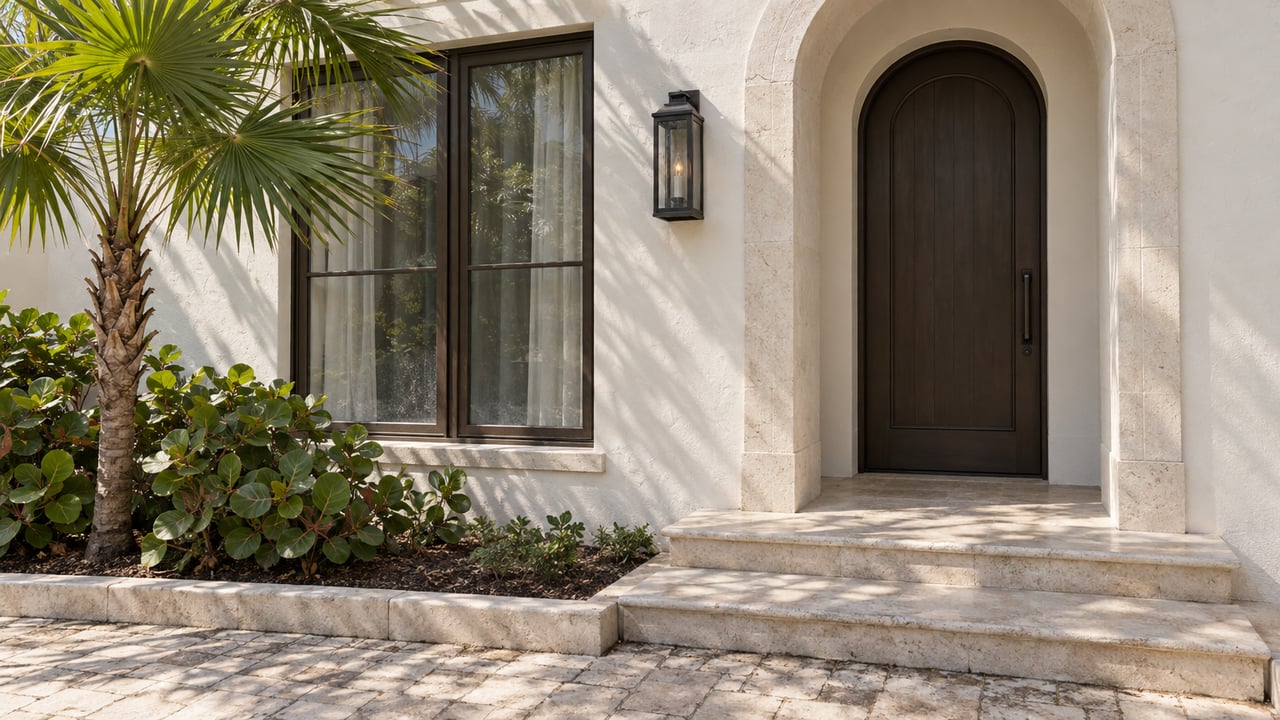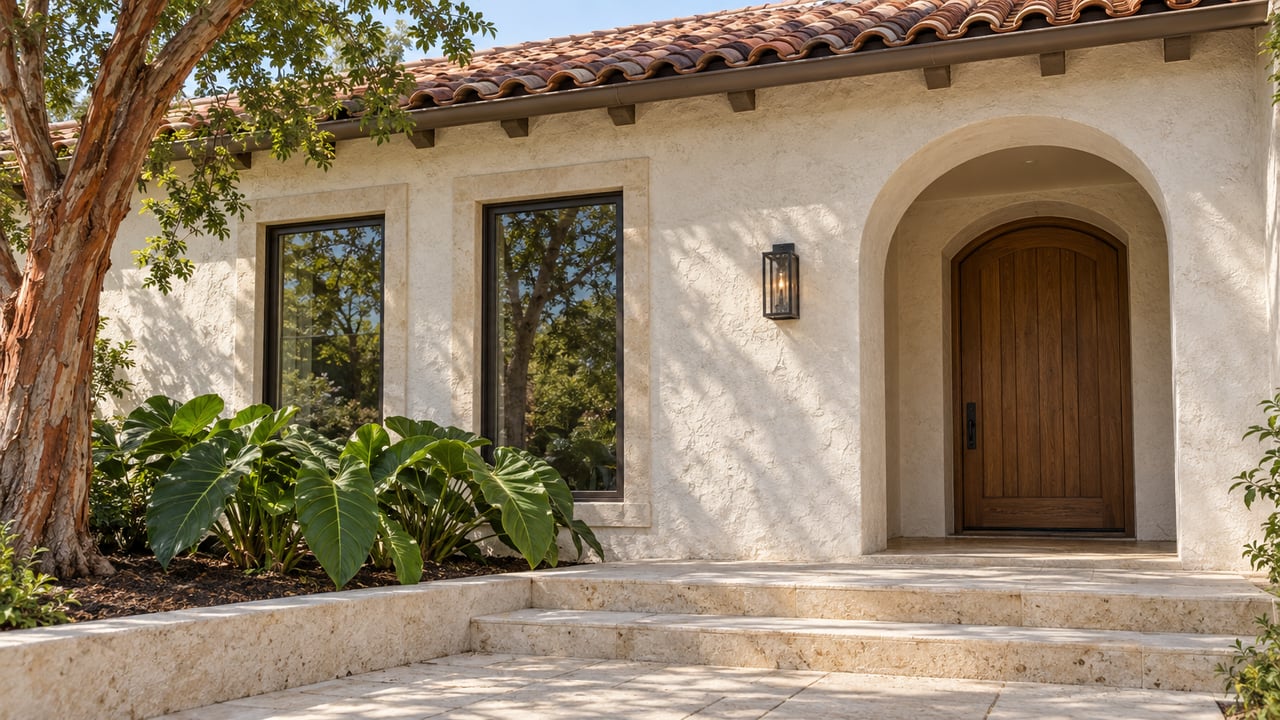
"My two daughters are growing and I need an extra room," Javier Payette told the Coral Gables Historic Preservation Board on September 17, 2026. "I don't want to change much from the house because I do know that it's an historic."
Payette had owned 314 Cadima Avenue for more than ten years. It is a 1925 Mediterranean Revival cottage designed by H. George Fink and built by the Lindsay Hopkins and Herbert Nichols partnership. He had asked the city for a historic significance determination himself. That request led to the hearing, and the board voted seven to nothing to make his house a local historic landmark. The Historic Preservation Association of Coral Gables sent a letter in support. City staff said his addition plans would go to the Board of Architects within weeks and then come back to the preservation board for a certificate of appropriateness.
An owner asking for preservation review so he could expand his house runs against the usual story about historic designation. It also shows how the process actually works for single-family homes in Coral Gables. Everything turns on one public document, the Historical Significance Determination Letter. A buyer who learns its status after signing a contract may find the plan for the house has already been settled.
The clock that starts when a letter is posted
The city's rule is Section 8-107(G) of the Zoning Code, adopted unanimously as Ordinance 2023-03 on June 10, 2023. Under it, every demolition permit for a building that is not designated must be approved by the Historic Preservation Officer or a designee. Once a letter is issued, these deadlines follow:
- 10 days. Any citizen may appeal the approval within 10 days of its posting online.
- 21 days. An appellant must file a completed designation report within 21 days of the notice of intent to appeal.
- 45 days. The Historic Preservation Officer makes a preliminary eligibility determination within 45 days of submittal.
- 90 days. If a property is found eligible, the board must hold its final designation hearing within 90 days. The owner and the officer can agree to defer it.
- 18 months. A demolition approval expires after 18 months unless the Development Services Department has issued the demolition permit.
The ordinance also lets the city require an independent analysis by a consultant of its choosing, such as appraisals, archeological assessments or historic assessments, with the fees paid by the applicant.
Clearing preservation review does not mean a project is approved. The city's Board of Architects page says typical building permits need both preliminary and final board approval. A tree survey and protection plan are required for submissions to the Development Review Committee and the board, and for demolition permits.
What the 2026 letters actually say
The city posts these letters on its Historical Significance Determination Letters page. Through its September 28, 2026 posting, the page listed about 65 addresses for 2026. Most of the letters reviewed for this piece reached the same finding.
On September 25, 2026, the office found that 1422 Milan Avenue in the Granada Section does not meet the minimum eligibility criteria for landmark designation. Staff would therefore not require board review of a demolition permit application. Letters for 425 Alminar Avenue, dated August 21, 2026, and 890 Alfonso Avenue, dated August 6, 2026, also found the properties ineligible.
The fine print matters to a buyer as much as the finding. The Milan letter says the determination "does not constitute a development order," is valid for 18 months, and requires the demolition permit to be issued within that period. After that, a new application is needed. The letter also says the finding can change "upon a demonstration of a change in the material facts." A letter dated September 2026 runs out in early 2028. A buyer planning to close, design and permit inside that window is working against a fixed date.
An eligible finding reads very differently. The April 17, 2026 letter for 1624 Granada Boulevard in Section C found the property met landmark criteria for historical and architectural significance and set a board hearing for Thursday, June 18, 2026, at City Hall, 405 Biltmore Way. It was posted April 20, so the hearing was about two months away. For anyone under contract on that house, two months is the minimum time before the city would say anything final.
Where designation became the permit strategy
Eligible findings reach the preservation board, and that is where the board's single-family docket in 2025 and 2026 looks unexpected. In several cases, designation came paired with approval for a larger house.
| Property | Board date | Requested alongside designation | Outcome |
|---|---|---|---|
| 2716 Cordova Street | May 2025 | Additions, site work, reduced rear setback | Designated after a third-party appeal; additions and variance approved |
| 826 Ortega Avenue | December 18, 2025 | Additions, front and side setback variances, enlarging a non-conforming structure, pool and gazebo separation | Designation and design approval, each unanimous |
| 2509 Indian Mound Trail | March 12, 2026 | Joining two adjacent single-family parcels, lot coverage and setback variances | Designated unanimously; design approval heard as a separate item |
| 314 Cadima Avenue | September 17, 2026 | Planned addition headed to the Board of Architects | Designated 7–0 at the owner's request |
The Indian Mound Trail case shows how far the approach can go. The house at 2509 is a two-bedroom Mediterranean Transitional home designed by William Merriam in 1935. Staff described it as among the earliest in that style in the city. The owners applied for designation themselves. In the same package they asked to combine the lot with the house next door and connect the two houses at the rear. One board member asked how designation would apply to the neighboring house at 2515, which is not designated. Staff answered that once the parcels are joined, the designation applies to the whole site and brings it under the board's jurisdiction. The owners' representative told the board that the designation had been proposed "with certain thoughts in mind as to what we can do with the property."
The trade is permanent. A designated house is reviewed by the board for every later change. The 410 Minorca Avenue landmark, built in 1935, needed a special certificate of appropriateness at the same September 17 meeting for a rear second-story addition and a one-story side addition. Design flexibility comes with ongoing oversight. A buyer valuing a designated house is paying for both, and the next owner inherits the arrangement.
How a settled plan gets reopened
A finding in the owner's favor can still change, and recent records show it happening in both directions.
In May 2025, the Historic Preservation Association of Coral Gables appealed a city staff determination on 2716 Cordova, a 1930s Minimal Traditional design by William Shanklin, and won. A staff finding that seemed final became a designation hearing. The association says it attends every monthly City Commission and preservation board meeting.
1258 Obispo Avenue went the other way. The house is a contributing resource in the Obispo Avenue Historic District. On September 18, 2025, the board rejected the owners' claim of undue economic hardship and denied a certificate of appropriateness for demolition. The owners filed an appeal four days later. The City Commission took it up October 28, deferred it to November 18, continued it at the owners' request to December 9, and then overrode the board by a 3–2 vote. The commission found that the record lacked competent substantial evidence for the denial. The owners got the result they wanted, but it took nearly three months after the board vote, through three commission meetings.
State law has not taken the decision away from the city. The 2026 Florida Starter Homes Act, CS/SB 948, would have limited some local restrictions on starter-home development on lots with historic property. It died in the Senate Judiciary Committee on March 13, 2026. The 2025 Live Local Act requires administrative approval of demolition only for qualifying multifamily projects. It does not cover an ordinary single-family teardown.
What belongs in the diligence file
For an older house, these items are as important as the inspection report:
- Whether a letter exists, and its date. Search the address on the city's letters page. Work out how many of the 18 months will be left at closing, and compare that with a realistic schedule for design and Board of Architects review.
- The posting date. If the letter was posted within the last 10 days, the citizen appeal window is still open.
- The finding and its criteria. An eligible letter lists the criteria cited. The 1624 Granada letter cited historical and cultural significance plus two architectural criteria, and noted that the final report may add or drop criteria.
- District status. The Obispo case involved a house already inside a local historic district. That calls for a different review than a standalone determination.
- Any pending board docket. Legistar agendas show whether designation, variances or a certificate of appropriateness are already in process for the address.
- Confirmation from the source. The Historical Resources and Cultural Arts Department at 2327 Salzedo Street issues these letters, and its letters invite owners to contact the office with questions.
For sellers, the same logic applies in reverse. If a house's appeal is a lot that can be rebuilt, a recent ineligible letter with plenty of time left on it settles the question a buyer's attorney will ask first. If the house is valued for its history, owner-initiated designation alongside an approved addition plan tells the buyer what the board has already accepted.
Frequently Asked Questions
Does an ineligible letter stay with the house after a sale? The letters are addressed to the current owners and describe the property by its legal description. The Milan letter says the determination is valid for 18 months and that a new application is required after it expires. Whether a buyer can rely on a seller's letter is a question to confirm with the city and with counsel before closing.
Does an eligible finding mean a house cannot be expanded? The 2025 and 2026 records show otherwise. At 826 Ortega, 2716 Cordova and 2509 Indian Mound Trail, designation and approval for additions or variances were handled together. All later exterior changes then require board review.
How long can the process take from start to finish? If no one appeals, a letter can stand on its own. With an eligible finding, the ordinance allows up to 90 days before a hearing. A commission appeal adds more. The Obispo appeal ran from late September to December 9, 2025.
The letter for an older Coral Gables house is often the most important document in the file, and it is best read before an offer is written. Cassis Burke Collection reviews determination records, board dockets and approval timelines as part of every acquisition and sale of an older Gables home. Request a private consultation to go over the record for a specific address.